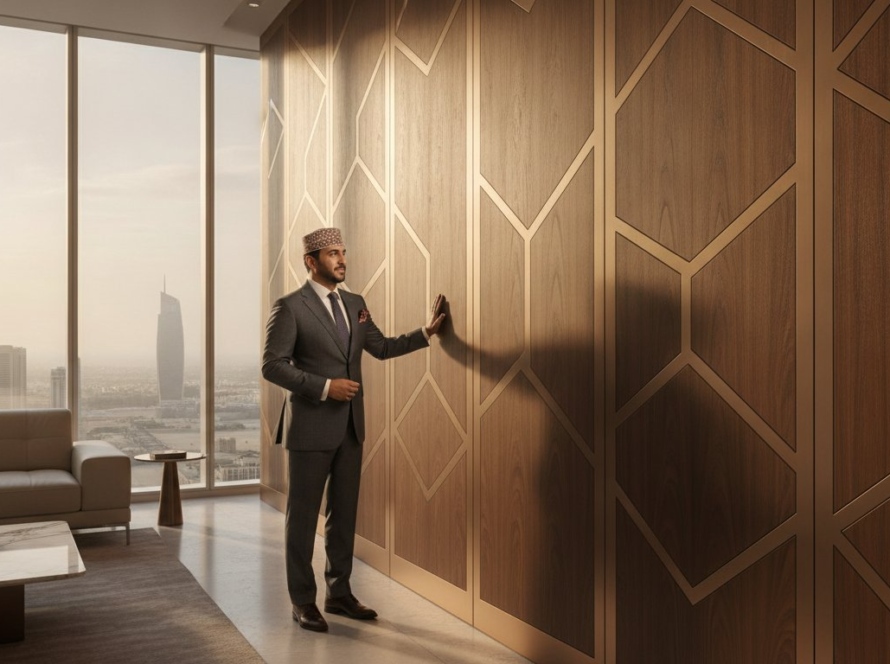
The most expensive timber in the world is no match for a UAE summer if the artisan ignores the science of moisture stabilization. It’s a common frustration to see a significant investment in bespoke installations begin to warp, crack, or lose its rich luster within just twelve months. Achieving durable woodwork hot climate UAE results requires a specialized approach that bridges traditional heritage with modern material science. You deserve the confidence that your architectural woodwork will remain as stable and beautiful as the day it was installed.
In this artisan’s guide, we’ll reveal the technical secrets behind crafting resilient installations that thrive despite extreme heat and humidity. We will explore the framework for selecting the right timber species and the professional preservation techniques that protect against high UV exposure. From the integration of blacksmith services for structural reinforcement to the application of marine-grade finishes, you’ll discover how we transform raw materials into lasting legacies. We’ll provide the clarity you need to navigate the choice between hardwoods and softwoods, ensuring your next national project stands the test of time.
Key Takeaways
- Master the science of Equilibrium Moisture Content (EMC) to ensure your timber is perfectly seasoned for the unique humidity shifts found across the UAE.
- Identify the most resilient species, such as Teak and Iroko, that provide the foundation for durable woodwork hot climate UAE environments.
- Explore advanced “floating” joinery techniques and micro-porous oils that accommodate natural wood movement while protecting against intense UV exposure.
- Understand how the integration of blacksmithing and bespoke carpentry creates a superior structural bond capable of withstanding extreme thermal expansion.
- Learn to distinguish between mass-produced failures and artisan-led installations that prioritize longevity, refinement, and a lasting cultural legacy.
The Challenge of Timber Integrity in the UAE Climate
Wood is fundamentally organic. Across the UAE, it faces an environment of unrelenting extremes that test the limits of even the finest materials. The primary difficulty lies in the hygroscopic nature of wood, which describes how timber constantly absorbs and releases moisture to reach equilibrium with its surroundings. Because our region experiences dramatic shifts between saturated coastal air and the parched heat of the interior, wood cells are in a state of perpetual stress. Climate-Resilient Woodwork is the intersection of material science and artisanal craft, where we anticipate these environmental pressures before the first cut is made. Without this foresight, even the most beautiful installations succumb to warping, checking, and rapid fiber degradation.
During the peak of summer, surface temperatures on exterior woodwork can soar. Higher density timbers often possess greater thermal mass, which leads to significant internal pressure if the joinery doesn’t account for expansion. This isn’t just about the wood getting hot; it’s about the cellular structure expanding at different rates than the moisture trapped within. This often leads to catastrophic structural failure in mass-produced items that lack the artisanal engineering required for durable woodwork hot climate UAE standards. We see this most often in joints that have been restricted, causing the wood to split against its own grain.
The Role of Humidity and Desiccation
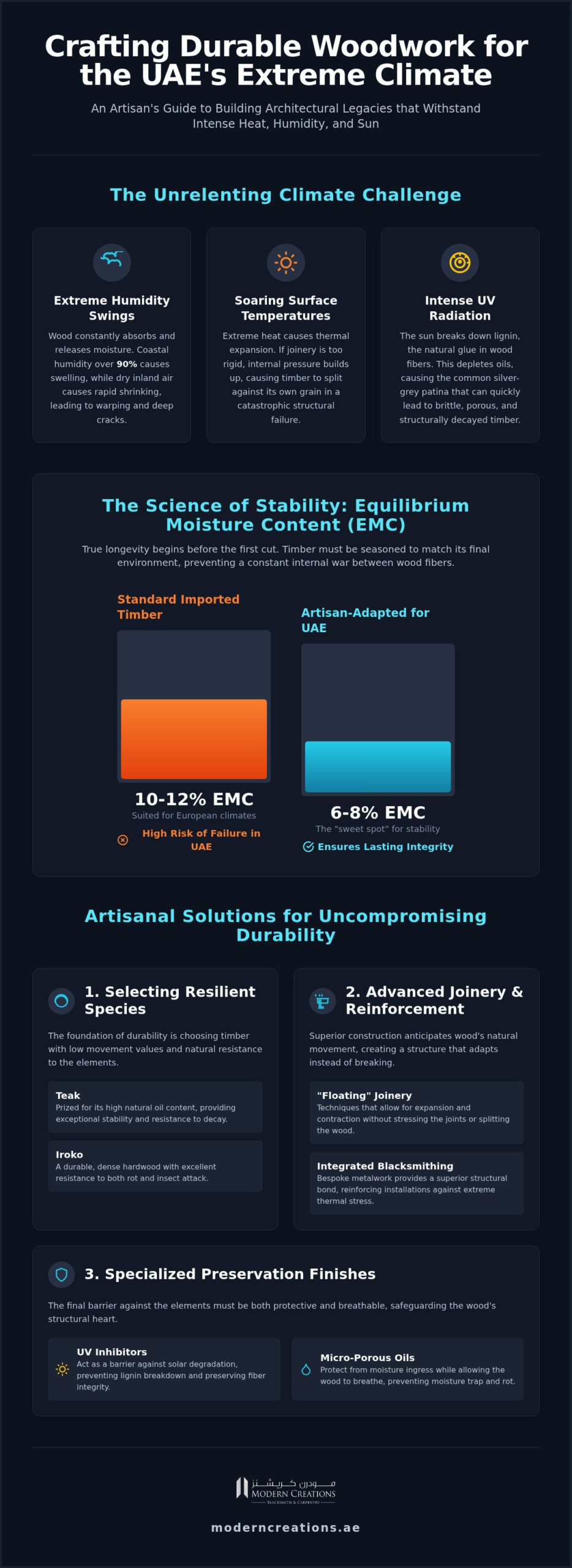
The geographical diversity found across the UAE presents a unique challenge for bespoke installations. Near the coast, humidity often exceeds 90 percent, saturating the timber fibers and causing them to swell. When that same wood is exposed to the bone-dry winds of the desert, rapid desiccation occurs. This sudden moisture loss causes the outer layers of the wood to shrink faster than the core, resulting in deep structural cracks known as checking. We prioritize timber with exceptionally low movement values to ensure stability through these aggressive cycles, focusing on species that don’t react violently to atmospheric shifts.
UV Radiation and Pigment Stability
The intensity of the sun does more than just heat the surface; it actively breaks down lignin, the natural glue that holds wood fibers together. As UV rays penetrate the surface, they deplete natural oils and cause the wood to lose its original character. This leads to “silvering,” a common sight on many exterior decks and pergolas. While some clients appreciate this silver-grey patina, it’s vital to distinguish between graceful aesthetic weathering and the brittle structural decay that follows when the surface becomes porous. Our approach ensures that the wood’s internal integrity remains uncompromised, even as the exterior reflects the passage of time. We use specific preservation techniques that act as a barrier against this solar degradation, keeping the timber’s structural heart intact.
The Science of Stability: Seasoning and Grain Selection
True longevity starts in the kiln. For timber to survive the intense thermal demands of the region, it must be seasoned to a precise Equilibrium Moisture Content (EMC). Most imported wood is dried to standards suitable for European climates, where moisture levels typically hover around 10 to 12 percent. In the UAE, however, indoor environments controlled by powerful air conditioning often drop to 6 percent, while outdoor humidity can push wood back toward 15 percent. This massive discrepancy is why mass-produced furniture often fails; it hasn’t been prepared for our specific atmospheric reality. Without professional seasoning, wood remains in a state of internal war, pulling against its own fibers as it tries to adapt.
Achieving the Ideal Moisture Balance
We target a specific EMC of 6 to 8 percent for indoor durable woodwork hot climate UAE projects. This ensures that once the cabinetry or paneling is installed, it won’t shrink and leave unsightly gaps or structural weaknesses. For exterior work, the range is slightly higher to accommodate seasonal humidity spikes. We insist that timber rests in its final environment for a period of acclimatization before fabrication begins. During this time, our artisans use digital moisture meters to verify that every board has reached its “sweet spot” of stability. If you’re planning a complex installation, our team at Modern Creations can guide you through the technical requirements for your specific site.
Grain Orientation: Quarter-Sawn vs. Plain-Sawn
How a log is cut dictates how it will move. Plain-sawn timber is common because it’s efficient to produce, but it’s prone to “cupping” as it reacts to heat and moisture. We prefer quarter-sawn timber for high-end joinery. By cutting the log at a 90-degree angle to the growth rings, we ensure that any expansion occurs primarily in the thickness of the board rather than its width. This orientation is the gold standard for structural integrity, providing a predictable and stable foundation for bespoke architectural elements.
Grain selection isn’t just an aesthetic choice. It’s a strategic decision. Vertical grain patterns provide a rhythmic beauty that also resists the warping forces of the midday sun. When we design wall cladding or bespoke cabinetry, we align these patterns to work with the natural physics of the wood. This meticulous attention to the internal geometry of the timber ensures that your investment remains a stable, refined masterpiece for decades. It’s a level of precision that mass-produced alternatives simply cannot replicate.
Selecting the Right Species for Thermal and Hygroscopic Resistance
Selecting the right species is the third pillar of longevity. While seasoning and grain orientation provide the structural framework, the biological makeup of the timber determines how it reacts to UV intensity and thermal shifts. For durable woodwork hot climate UAE applications, we prioritize “Climate-Hardy” hardwoods that possess natural defensive properties. Softwoods like pine or spruce often fail rapidly in the desert. Their high resin content can bleed under the midday sun, and their open grain leads to excessive moisture absorption and desiccation cycles that cause the wood to crumble. True craftsmanship begins by rejecting these vulnerable materials in favor of timber that can withstand the national climate.
Teak and Iroko: The Outdoor Powerhouses
Teak remains the undisputed gold standard for exterior architectural woodwork across the UAE. Its high natural oil and silica content provides an internal defense against water ingress and pest infestations. When comparing Burmese Teak to Plantation Teak, the former offers superior stability for complex projects because the slower growth in natural forests results in a tighter, more oil-rich grain. For large-scale external cladding where Teak might be over-engineered, Iroko serves as an exceptional alternative. Often called “African Teak,” Iroko shares many of the same rot-resistant qualities and maintains its structural form beautifully when exposed to the elements. It’s a robust choice for those seeking a balance between durability and scale.
Hardwoods for Refined Interior Millwork
Inside, where powerful air conditioning creates a consistently low-humidity environment, different challenges arise. American Walnut is a favorite for high-end residential cabinetry because of its exceptional thermal stability and rich, inviting aesthetic. For commercial carpentry in high-traffic spaces, we evaluate timber using the Janka hardness scale to ensure the surface resists indentations and daily wear. European Oak is frequently requested for its timeless appeal, but it requires specialized, breathable finishes to prevent the fibers from becoming brittle in the dry indoor air. By selecting species like Sapele or African Mahogany, we leverage their interlocking grain patterns to provide the refined precision required for sophisticated millwork. These species offer the following benefits for interior projects:
- Superior Dimensional Stability: They resist the “movement” caused by sudden temperature shifts when doors or windows are opened.
- Refined Grain Patterns: Ideal for high-end cabinetry solutions that require a seamless, polished appearance.
- Natural Pest Resistance: Essential for maintaining the integrity of built-in installations over many decades.
By understanding the physiological differences between these hardwoods, we can select the perfect material for each specific environment. This ensures that every bespoke installation isn’t just a temporary addition, but a lasting legacy of quality and refinement.
Preservation Strategies: Advanced Finishes and Joinery Techniques
Preservation is the final bridge between a finished piece and its lasting legacy. While selecting the right species provides the foundation, the way we assemble and coat the timber determines if it will survive the next decade of national summers. We’ve moved away from rigid, film-forming lacquers that eventually crack under thermal stress. Instead, we utilize micro-porous oils that saturate the wood fibers, offering protection from within while allowing the material to respire. High-end wood finishes must incorporate specialized UV-absorbers to act as a chemical shield against solar radiation. This approach is essential for maintaining durable woodwork hot climate UAE standards, ensuring that the natural beauty of the grain is preserved without the risk of peeling or clouding.
Micro-porous Finishes vs. Film-Forming Coatings
Traditional varnishes create a brittle plastic shell. When the wood expands in the heat, that shell breaks, allowing moisture and UV rays to penetrate the cracks. Micro-porous hard-wax oils are different. They don’t peel. Because they bond with the wood on a molecular level, they remain flexible. This makes localized repairs simple; you don’t need to sand the entire installation to fix a single weathered spot. For exterior projects, we often recommend matte or satin finishes. These textures diffuse high-intensity sunlight more effectively than high-gloss coatings, which can sometimes act as a lens and accelerate thermal damage to the underlying fibers.
Engineering for Movement: Joinery and Installation
Joinery is where the artisan’s vision meets the laws of physics. We employ “floating” joinery techniques, such as tongue-and-groove systems with intentional expansion gaps, to allow the wood to move as the humidity fluctuates across the UAE. Time-honored methods like the dovetail and mortise-and-tenon remain the superior choice for bespoke cabinetry because of their mechanical strength. To stabilize larger architectural spans, we integrate blacksmith-forged metal reinforcements. This synergy between wood and metal provides a level of structural integrity that wood alone cannot achieve, preventing the sagging or bowing common in lesser installations.
If you’re envisioning a project that requires this level of technical precision, explore our bespoke Architectural Woodwork services to see how we blend heritage with modern durability.
Modern Creations: Crafting Legacies through Climate-Resilient Artistry
Modern Creations stands as the definitive bridge between the time-honored heritage of the region and the rigorous demands of contemporary architectural design. Led by Creative Director Abdulla Bin AlShaikh, our brand is built on a foundation of deep-seated pride and an uncompromising passion for the craft. We don’t believe in the disposable nature of mass-produced furniture. Instead, we focus on delivering durable woodwork hot climate UAE clients can rely on for generations. Every project is an opportunity to translate abstract ideas into tangible, high-quality results that honor the material science and artisanal precision we’ve explored throughout this guide.
The Bespoke Journey: From Vision to Installation
Our process begins with a sophisticated consultation that goes beyond simple measurements. We serve as a master artisan guide for complex national projects, advising on the precise material selection and seasoning requirements necessary for the specific site conditions across the UAE. This meticulous attention to detail ensures that every installation, from intricate cabinetry solutions to expansive architectural millwork, is engineered for our atmospheric realities. Transparency is a hallmark of our fabrication process. We believe the relationship between an artisan and a client is a shared creative journey, where technical expertise meets visionary design.
The integration of our blacksmith services provides a unique advantage for structural integrity. By pairing handcrafted metalwork with premium timber, we create reinforced installations that resist the warping forces of thermal expansion. This synergy is particularly vital for residential and commercial carpentry that requires both aesthetic refinement and industrial-grade stability. It’s a level of coordination that ensures your investment remains structurally sound even as the mercury rises.
A Commitment to Excellence and Storytelling
We view every piece of architectural woodwork as more than just a functional element; it’s a narrative of quality and a commitment to legacy. In a landscape often dominated by temporary solutions, we offer the quiet confidence of work that endures. Our team remains accountable for every joint and finish, ensuring that the final output reflects the highest standards of the craft. We invite you to move past the uncertainty of failing installations and invest in artistry that thrives in our national climate. Every grain we select and every joint we forge is a testament to our commitment to excellence.
Embark on your shared creative journey with Modern Creations and discover how we can transform your vision into a lasting architectural legacy that stands the test of time.
Building a Legacy of Resilience
Investing in bespoke woodwork across the UAE is more than a design choice; it’s a commitment to a lasting architectural legacy. We’ve explored how the intersection of material science and artisanal craft prevents the heartbreak of premature failure. By prioritizing precise moisture seasoning and selecting climate-hardy species like Teak or Iroko, you ensure your installations remain stable through the most aggressive thermal shifts. Achieving durable woodwork hot climate UAE standards requires this meticulous attention to detail, from the orientation of the grain to the application of micro-porous, UV-resistant finishes.
At Modern Creations, our founder-led vision by Creative Director Abdulla Bin AlShaikh ensures that every project reflects a perfect harmony between traditional heritage and modern durability. We specialize in the sophisticated integration of bespoke carpentry and blacksmithing, providing reinforced structural integrity for luxury villas and high-tier commercial spaces. Your vision deserves the precision of a master artisan who understands the unique demands of our national climate. Consult with our master artisans for your next national architectural project and begin a shared creative journey toward excellence. Let’s transform your abstract ideas into a refined reality that stands the test of time.
Frequently Asked Questions
Which wood is most resistant to the UAE’s high humidity?
Teak is the most resilient choice for high-humidity environments across the UAE due to its exceptional natural oil content. These oils act as a biological barrier against moisture ingress and rot. While other hardwoods might swell or warp when the coastal humidity peaks, Teak maintains its dimensional stability. This makes it the preferred material for durable woodwork hot climate UAE projects that require longevity without compromising on aesthetic refinement.
How often does bespoke exterior woodwork need maintenance in the UAE?
Bespoke exterior installations typically require a maintenance review every six to twelve months to combat intense UV exposure. We recommend applying a fresh coat of micro-porous oil to replenish the timber’s natural defenses before the peak of summer. This proactive approach prevents the fibers from becoming brittle and grey. Regular cleaning with specialized wood soaps also ensures that dust and sand don’t abrade the protective finish of your architectural woodwork.
Can I use European Oak for my villa interiors across the UAE?
You can certainly use European Oak for villa interiors, provided the timber is seasoned to the correct moisture levels. Because indoor air conditioning creates a very dry environment, Oak must be kiln-dried to reach an Equilibrium Moisture Content of approximately 6 to 8 percent. Without this precise preparation, the wood may shrink and develop gaps. We use specialized breathable finishes to ensure the Oak remains stable and beautiful within your national residence.
What is the difference between kiln-dried and air-dried wood for the desert?
Kiln-drying is the only reliable method for achieving the low moisture levels required for the desert climate. Air-drying relies on atmospheric conditions, which are often too humid or inconsistent across the UAE to reach the necessary stability. Kiln-drying allows artisans to control the environment, pulling moisture from the core of the wood. This process ensures that the timber won’t react violently to the sudden transition from a workshop to a climate-controlled interior.
Why is my custom cabinetry cracking after only one summer?
Custom cabinetry often cracks because the timber wasn’t properly acclimatized or the joinery didn’t allow for natural movement. If the wood was seasoned for a cooler climate, it’ll lose moisture rapidly when exposed to UAE air conditioning. This rapid desiccation causes the fibers to pull apart, leading to structural cracks. Our approach uses “floating” joinery techniques and precision seasoning to prevent these failures, ensuring your investment survives the most intense summer heat.
Does the color of the wood finish affect its heat absorption?
The color of your wood finish significantly impacts its surface temperature and thermal expansion. Darker stains absorb a higher percentage of solar radiation, which can cause the timber to heat up and expand more aggressively than lighter tones. For exterior durable woodwork hot climate UAE applications, we often suggest natural or lighter finishes to reflect UV rays. This helps minimize the internal stress on the wood cells and extends the life of the protective coating.
Is it better to use solid wood or engineered wood for UAE interiors?
Both materials have their place in luxury interiors, but engineered wood offers superior stability for large, flat surfaces like wall cladding. Its layered construction resists the warping and cupping that can affect solid timber in fluctuating humidity. However, for intricate bespoke carvings or structural elements, solid hardwood remains the artisanal choice. We often integrate both materials to leverage the stability of engineered cores with the refined beauty of solid timber faces.
How does blacksmithing improve the durability of architectural woodwork?
Blacksmithing provides essential structural reinforcement for large architectural timber spans that might otherwise bow or sag. By integrating bespoke metal brackets and hand-forged hardware, we create a rigid internal skeleton that supports the wood’s weight. This synergy is particularly important in the UAE, where thermal expansion can put immense pressure on traditional joinery. Our blacksmith services ensure that your woodwork remains perfectly aligned and structurally sound despite the environmental stresses of the region.